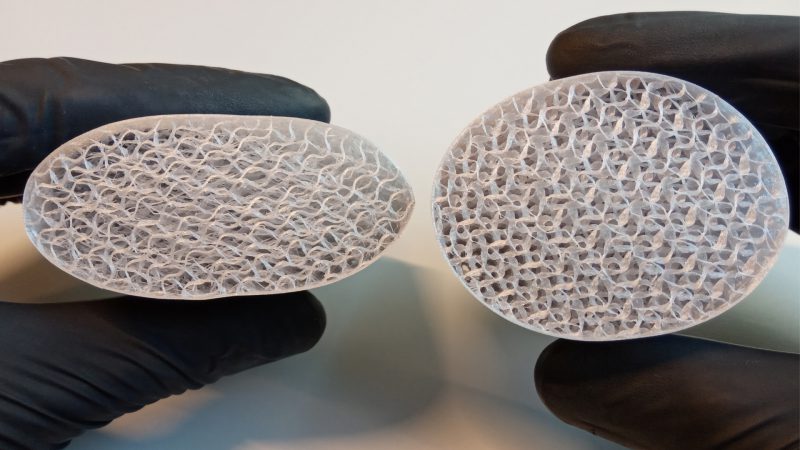
Compliant
The development of flexible, porous, and foam-like structures for improved shock absorption and mechanical adaptability. This research explores how 3D printing enables the design of compliant materials and structures that can deform under load, absorb impact energy, and recover their shape. Key aspects include:
- Customizability – tailoring structural geometry and printing parameters to meet the requirements of applications ranging from automotive components to sports equipment.
- Sustainable manufacturing – using conventional thermoplastics, optimizing material usage, and minimizing waste to create more efficient and sustainable shock-absorbing solutions.
- Mechanical performance – optimizing infill patterns, density, and structural parameters to achieve the desired balance of flexibility, durability, and impact resistance.